Teacher’s Day Celebration: KLH Announces 12 Special Teacher Empowerment Initiatives
IPOH, May 16 (Bernama) — The Ministry of Education (MoE) announced 12 initiatives to empower and strengthen the work of teachers in conjunction with this year’s 55th National Teachers’ Day Celebration.
Minister of Education Fadhlina Sidek said that to support the professional development of educators in the field of digital literacy, the Google Certified Educator (GCE) Level One and Level Two certification courses were continued free of charge for all teachers.
He said the effort brought benefits to all teachers involving a per teacher fee of RM40 for GCE Level One and RM100 for GCE Level Two. The Malaysian Ministry of Education offers a special Federal Training Prize, which is given to teachers who are willing to make sacrifices to teach in schools that have problems with proha such as schools in hospitals, floating schools, rural schools in P1, P2 and P3 areas.
“They will be selected for the Masters and PhD (Doctor of Philosophy) programs to ensure what we want, especially to ensure they can continue to serve and of course their studies will help improve access to education in the country,” he said.
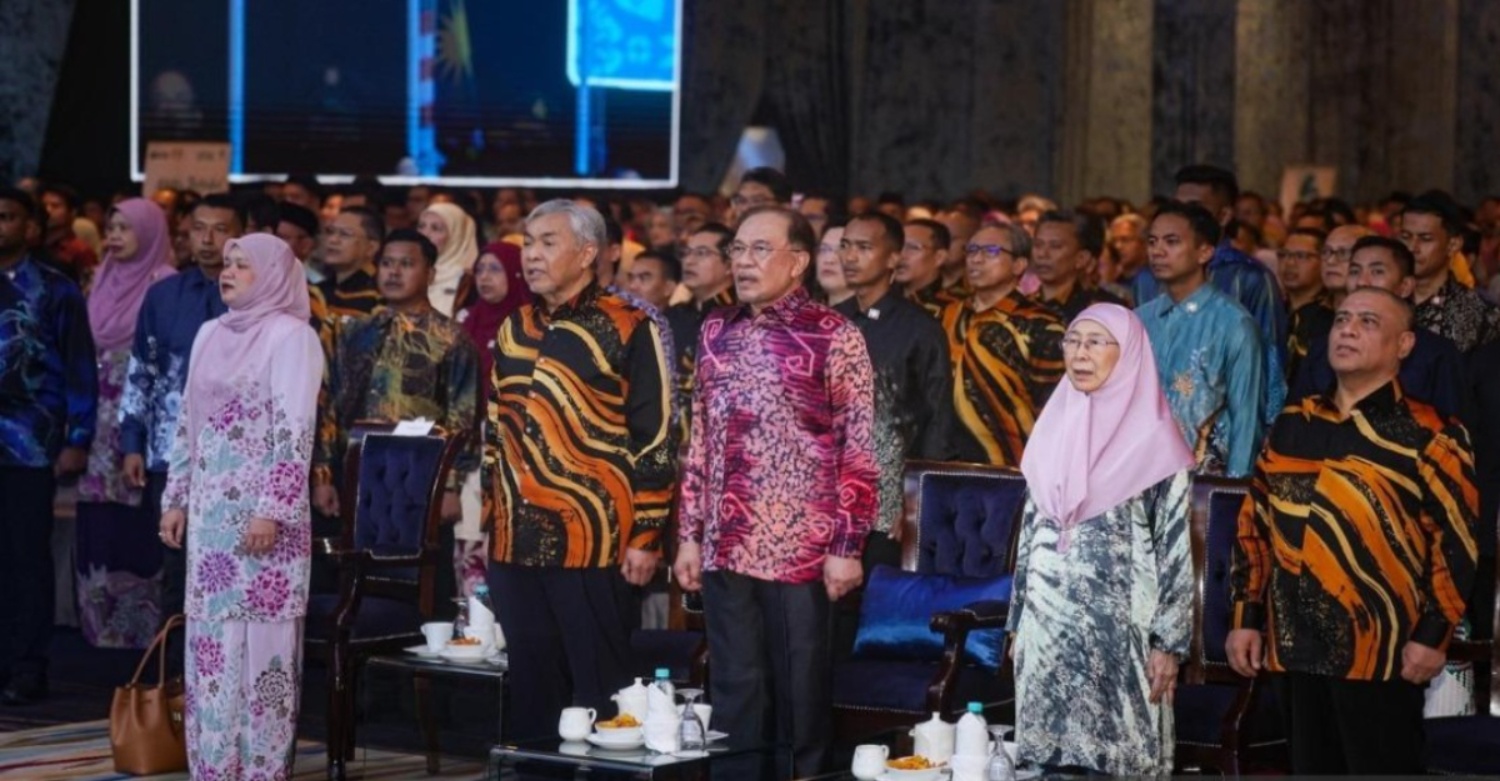
He said this while speaking at a celebration ceremony themed Guru Bitara Nadi Negara which was officiated by Prime Minister Datuk Seri Anwar Ibrahim here today.
Fadhlina said the Ministry of Education and Culture would provide Federal Teacher Scholarships to school leaders to continue their studies at master’s level.
“So principals, principals, senior assistants must take advantage of this opportunity to continue their specialized studies in providing scholarships to school leaders,” he said.
Meanwhile, Fadhlina said that her party also saw demographic challenges which caused teachers to have difficulty carrying out classes online.
For this reason, KLH introduced the Offline Digital Environment Network (NODE) to ensure that access to digital learning can continue and be activated even without Internet access.
“To this end, the Ministry of Education, through its sponsorship of the Tun Hussein Onn Guru Foundation, has allocated RM1 million to strengthen the implementation of this program in schools in rural areas and islands under the disadvantaged schools program,” he said.
Fadhlina said an allocation of RM169 million was given to supply devices to each school to further strengthen the school curriculum next year, so that they can apply technology without interruption in the teaching and learning process.
He also announced an additional allocation of RM100 million to carry out maintenance and upgrades of teachers’ quarters across the country, in addition to an allocation of RM50 million to carry out maintenance of teachers’ residences.
Fadhlina said that the Co-Curricular Recording System was eliminated manually by giving autonomy to schools to manage co-curricular records according to their respective suitability and creativity, before recording students’ co-curricular information in the Physical, Sports and Co-Curriculum Assessment System (PAJSK).
Meanwhile, he said RM10.5 million had been allocated to provide additional reading materials for all 10,515 preschool classes nationwide through the Preschool Reading Culture Empowerment (PAKAT Program).
The first phase of the RM122.4 million allocation was also channeled directly to schools for the implementation of STEM (Science, Technology, Engineering and Mathematics) and TVET (Technical and Vocational Education and Training) programs as well as all co-curricular programs in schools, he said.
He said the Tun Hussein Onn Guru Foundation provided assistance of RM1,000 to every teacher whose child scored 10A in the 2025 Sijil Belajar Malaysia (SPM) exam.
A 50 percent discount for the first six months on school canteen rental fees was also announced, and it is hoped that this step will continue to maintain reasonable food prices and quality food for all school residents.
PakarPBN
A Private Blog Network (PBN) is a collection of websites that are controlled by a single individual or organization and used primarily to build backlinks to a “money site” in order to influence its ranking in search engines such as Google. The core idea behind a PBN is based on the importance of backlinks in Google’s ranking algorithm. Since Google views backlinks as signals of authority and trust, some website owners attempt to artificially create these signals through a controlled network of sites.
In a typical PBN setup, the owner acquires expired or aged domains that already have existing authority, backlinks, and history. These domains are rebuilt with new content and hosted separately, often using different IP addresses, hosting providers, themes, and ownership details to make them appear unrelated. Within the content published on these sites, links are strategically placed that point to the main website the owner wants to rank higher. By doing this, the owner attempts to pass link equity (also known as “link juice”) from the PBN sites to the target website.
The purpose of a PBN is to give the impression that the target website is naturally earning links from multiple independent sources. If done effectively, this can temporarily improve keyword rankings, increase organic visibility, and drive more traffic from search results.